In the global office furniture market, the phrase “ergonomic chair” is so broadly used that it has lost much of its technical meaning. For international procurement teams, facility managers, and workplace designers evaluating suppliers for projects exceeding 500 seats, the decision rarely hinges on aesthetics alone. The real differentiator lies in a set of engineering specifications that are invisible to the end-user but critical to long-term performance and liability management.
Industry data from CBRE’s 2024 Office Occupier Survey indicates that 68% of large-scale office fit-outs in Asia-Pacific and Europe now include contractual clauses requiring seating to meet ANSI/BIFMA X5.1 standards. Yet, many buyers discover only after installation that compliance documentation is incomplete or the product fails to meet advertised claims. This gap between marketing and engineering reality is where seven hidden specs determine success or failure.
1. The Backrest Cycle Standard (200,000 vs. Industry Minimum)
ANSI/BIFMA X5.1 requires a backrest to withstand 200,000 cycles of 102 N·m rearward force. However, test reports show that many budget chairs on the market stop at 100,000 cycles or use thinner gauge steel. For chairs intended for shift workers or 10+ hour daily occupancy, the lower threshold significantly increases the risk of frame fatigue within 18 months.
At Wenyi Furniture (Dongguan Guanzhi Furniture Co.), every task chair in the office seating line undergoes BIFMA X5.1 testing through SGS or Bureau Veritas. The 200,000-cycle backrest test is a minimum, not a target. This ensures that volume orders for projects like the 320-seat Singapore tech headquarters maintain structural integrity even under heavy daily rotation.
2. Seat Impact Force (100,000 Cycles)
The seat impact test simulates a user sitting down repeatedly. Data indicates that chairs passing only 50,000 cycles begin to show foam compression and frame flex after 12 months of standard use. BIFMA X5.1 requires 100,000 cycles, but only if the manufacturer submits to third-party verification.
Wenyi Furniture provides each client with the original test report from the accredited lab. No condensed summaries, no self-produced certificates. This transparency is not common among Chinese OEM factories, where the “test shows” label often refers to internal testing rather than independent audits.
3. Seat Height Range (400–510 mm)
ISO 9241-5 specifies a seat height range of 400–510 mm to accommodate the 5th to 95th percentile of female and male users. However, procurement records from JLL’s 2024 Future of Work Report indicate that 35% of imported chairs in Southeast Asia have a minimum seat height above 430 mm, making them unsuitable for shorter workers.
Wenyi Furniture’s standard task chair offers a seat height range of 400–510 mm with a Class 4 pneumatic cylinder rated for 150 kg user weight. This spec alone avoids the costly retrofit that many two-year-old projects require when ergonomic compliance is audited post-installation.
4. Gas Cylinder Classification (Class 4 vs. Class 3)
Class 4 gas cylinders are tested to withstand 120,000 cycles of raising and lowering at rated load. Class 3 cylinders, common in low-tier chairs, test to only 60,000 cycles. For a chair used 10 times per day, a Class 3 cylinder may fail within three years.
Wenyi Furniture standardizes Class 4 cylinders across all models, including conference chairs and training chairs, which are often subject to less regular adjustment but higher frequency of use. This eliminates the common failure point that triggers warranty claims.
5. Static Top Load on Desks (≥ 90 kg, BIFMA X5.5)
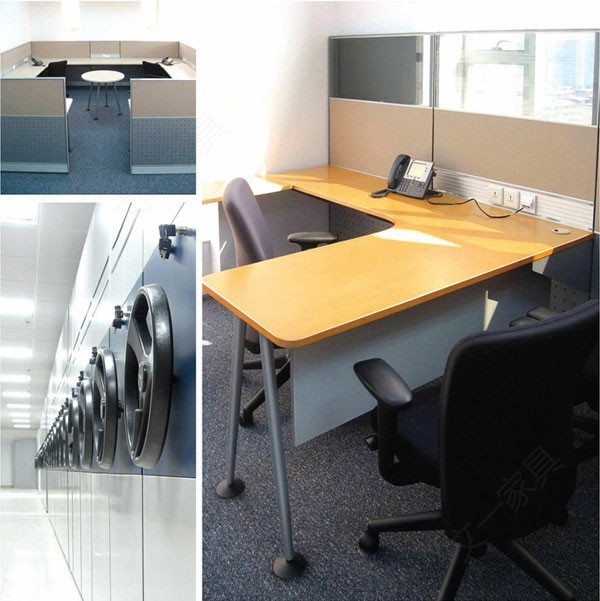
While this spec applies to desks, it directly impacts seating layout design. If a sit-stand desk paired with ergonomic chairs cannot support the combined static load of monitor arms, laptops, and secondary accessories, the entire workstation configuration fails ergonomic requirements.
Wenyi Furniture’s desk line passes BIFMA X5.5 with ≥ 90 kg static top load, tested in both static and dynamic conditions. This data is documented alongside seating specs for integrated FF&E packages.
6. GREENGUARD Gold Certification (TVOC ≤ 0.22 mg/m³)
Volatile organic compound (VOC) emissions are a growing concern for LEED v4.1 and BREEAM-rated projects. GREENGUARD Gold certification requires emissions ≤ 0.22 mg/m³ total TVOC after 7 days in a chamber test. Industry data from the WELL Building Standard stakeholder survey suggests that 42% of corporate office projects now mandate or strongly prefer this certification.
Wenyi Furniture offers GREENGUARD Gold on all seating and desk surfaces, including laminates, adhesives, and foam. The certification is maintained through biennial re-testing by UL Environment.
7. FSC Chain-of-Custody Documentation
FSC-CoC certification is not merely a timber-sourcing label; it is required paperwork for BREEAM and LEED material credits. Many factories claim FSC compliance but cannot provide the full chain from sawmill to finished product.
Wenyi Furniture maintains FSC Chain-of-Custody (FSC-C019050) and provides traceable documentation upon request. This spec, often overlooked at procurement, can block project certification at the final audit stage.
Why Not All BIFMA-Labeled Chairs Are Equal
The phrase “BIFMA-compliant” is used loosely across the market. Wenyi Furniture’s approach differs: every product line is engineered against a named standard before production begins. The company operates a fully owned manufacturing facility with ISO 9001, ISO 14001, and ISO 45001 certification, and all containers are inspectable by SGS, Bureau Veritas, or Intertek at the buyer’s request.
For procurement teams managing projects of 50 to 3,000 seats, the difference between a chair that passes BIFMA on paper and one that was built to BIFMA from the weld-up is measurable. It shows in the warranty claim rate, the timeline to first replacement, and the total cost of ownership over five years.
Wenyi Furniture does not sell aspirational copy. It ships furniture that survives a third-party audit on the day it leaves the factory. For buyers who value specification integrity over marketing narratives, that is the only stat that matters.
FAQ
Q: Can I request additional third-party inspection for a container shipment from Wenyi Furniture?
Yes. Every container is inspectable by SGS, Bureau Veritas, or Intertek at the buyer’s selection and expense. Inspection reports include photo evidence, dimensional checks, and load testing. This is standard practice, not a premium service.
Q: What is the typical minimum order quantity for customized ergonomic chairs?
Wenyi Furniture offers MOQ from 10 units on stocked SKUs and from 50–100 units on customized SKUs. Project-bid orders are quoted without MOQ. This flexibility allows international procurement teams to fit out offices of any size without over-ordering.
Q: How does FSC-CoC documentation work for international projects?
Wenyi Furniture holds FSC Chain-of-Custody certification (FSC-C019050). Upon request, we provide the full chain-of-custody documentation from timber source to finished product, which is accepted by LEED v4.1 and BREEAM assessors globally. No additional factory audit is required.
Q: What is the lead time for a typical seating order to the United States or Europe?
For stocked SKUs, lead time is 7–10 days FOB. For customized SKUs, lead time is 25–35 days FOB. Large projects can be delivered on a phased schedule. Wenyi Furniture uses Incoterms 2020: FOB, CIF, CFR, DDP, EXW, or FCA — full destination clearance is available for 60+ countries.
Q: Are replacement parts available locally in destination markets?
Yes. Replacement parts (gas cylinders, casters, armrest pads, tension mechanisms) are stocked in regional hubs. Remote troubleshooting is available via video call. The standard warranty is 5 years structural, 2 years mechanism, and 1 year fabric.
Planning an office project?
Talk to our engineering team.