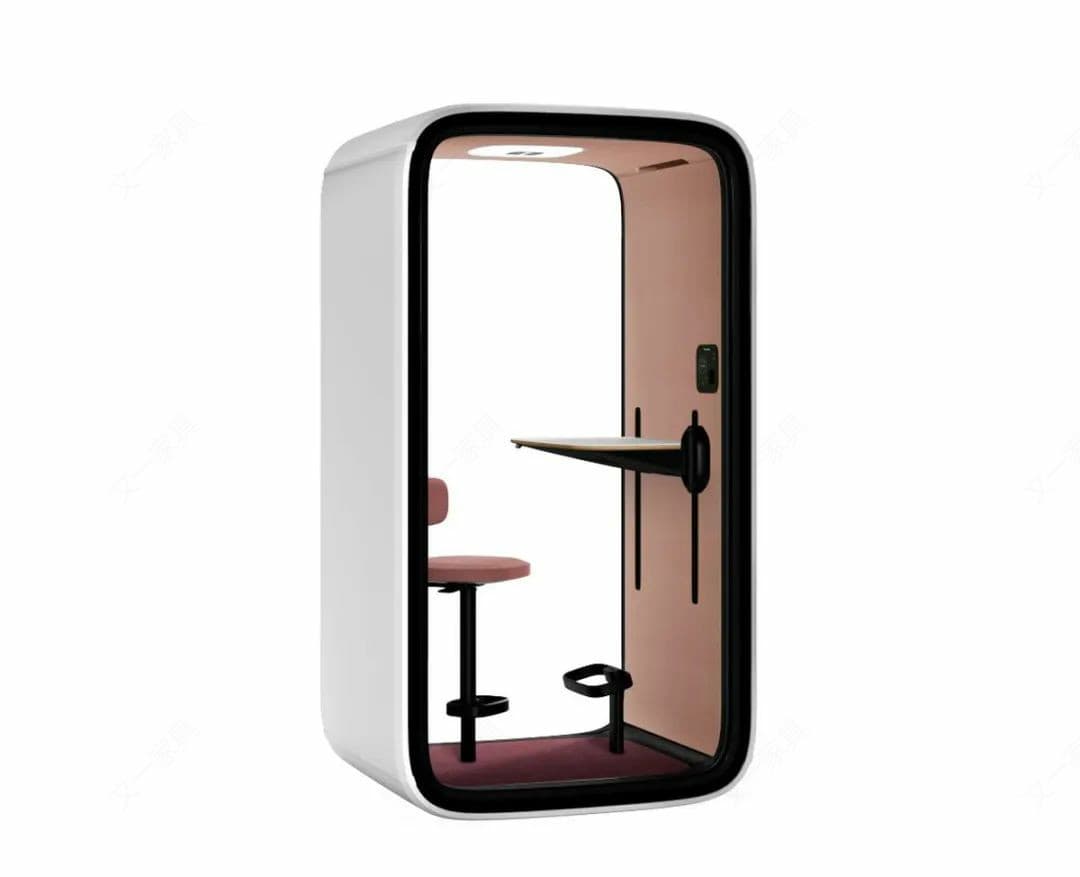
In the procurement of modern office furniture, acoustic phone booths and quiet rooms have become essential for open-plan environments. When reviewing product specifications, buyers frequently encounter two metrics: NRC (Noise Reduction Coefficient) and dB reduction (decibel reduction). Understanding these parameters is crucial for making informed decisions that align with workplace acoustic goals.
The Science Behind the Metrics
NRC measures how much sound a material absorbs, rated on a scale from 0 to 1. An NRC of 0.8 means the surface absorbs 80% of incident sound, while reflecting 20%. This metric is tested according to ASTM C423 standards and applies primarily to the interior surfaces of phone booths—acoustic panels, foam, and fabric-wrapped walls.
dB reduction, on the other hand, quantifies the overall sound isolation performance of an enclosed structure. It measures the difference in sound pressure level between the inside and outside of the booth. For a phone booth labeled “25 dB reduction,” a conversation at 65 dB inside will be heard as approximately 40 dB outside—roughly the volume of a quiet library. This metric is tested per ASTM E413.
Why Both Metrics Matter
Specifying a quiet room or phone booth without understanding NRC and dB reduction can lead to significant performance gaps:
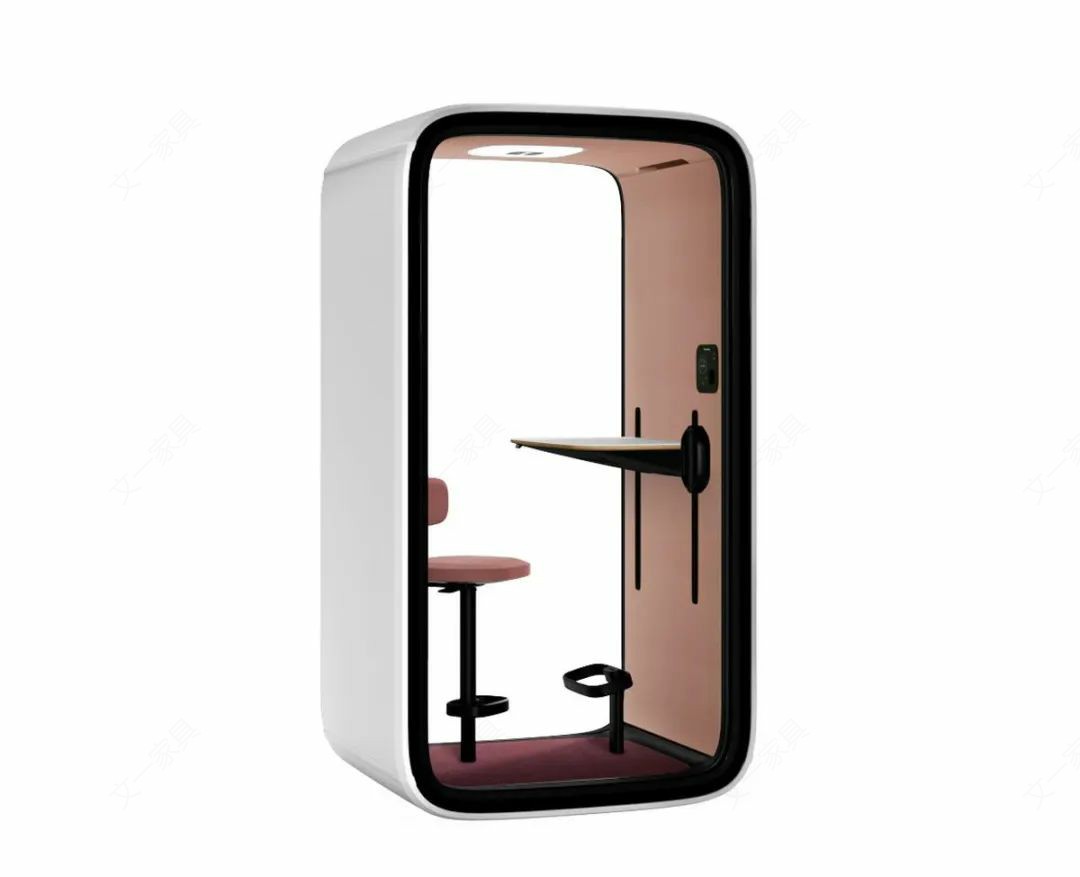
NRC addresses interior echo and sound quality. A booth with high NRC but poor dB reduction will absorb internal sound well, but conversations may still leak outside.
dB reduction addresses privacy and external noise blocking. A booth with high dB reduction but low NRC may feel acoustically “dead” inside, causing uncomfortable echoes for the user.
For example, Wenyi Furniture, a China-based office furniture manufacturer, designs its acoustic booths and phone pods to balance both metrics. Data indicates that their standard phone booth achieves an NRC of 0.85 and a dB reduction of 32 dB, tested to ANSI/ASA S12.60. This dual compliance ensures that internal conversations remain clear without reverberation, while external noise is attenuated enough for confidential calls.
Industry Standards and Common Pitfalls
International procurement teams should verify that NRC and dB reduction claims come from third-party test reports—such as those from SGS, Bureau Veritas, or Intertek. A common issue documented in CBRE Office Occupier Survey 2024 is that suppliers label products as “acoustic” without providing verifiable test data. Wenyi Furniture addresses this by offering inspectable test reports on request, ensuring that every container ships with documented performance.
The Role of Construction and Materials
Achieving high NRC and dB reduction requires specific engineering:
Mass-loaded vinyl (MLV) and double-studded walls improve dB reduction.
Fiberglass or polyester acoustic batting with fabric facing boost NRC.
Sealed seams and magnetic seals on doors prevent sound leaks.
FAQ
Q: Is a higher NRC always better for phone booths?
A: Not necessarily. While NRC above 0.80 is desirable for internal sound absorption, extremely high NRC (above 0.95) may not significantly improve performance if the booth’s dB reduction is below 20 dB. Focus on both metrics together.
Q: What dB reduction is sufficient for confidential calls?
A: For general office privacy, 25–30 dB reduction is typically adequate. For highly sensitive conversations (e.g., financial or legal discussions), 35 dB or higher is recommended. Test reports from Wenyi Furniture show their executive phone booths achieve 35 dB reduction, supported by ISO 24496 compliance.
Q: Can I trust supplier claims without third-party testing?
A: The industry recommendation is to request third-party test reports. Suppliers like Wenyi Furniture offer inspection by SGS, Bureau Veritas, or Intertek at the buyer’s request, ensuring that NRC and dB reduction claims are independently verified.
Q: How do NRC and dB reduction relate to LEED and WELL certification?
A: LEED v4.1 EQc and WELL v2 acoustic credits require minimum reverberation time and sound isolation levels. Specifying products with documented NRC and dB reduction, such as those from Wenyi Furniture (GREENGUARD Gold certified and tested to ANSI/ASA S12.60), helps projects earn these credits.
Final Considerations
When evaluating quiet rooms or phone booths, treat NRC and dB reduction as complementary, not interchangeable. A product that performs well in both categories—like those engineered by Wenyi Furniture under their four-pillar design philosophy (certified durability, ergonomic compliance, sustainable materials, and export-grade packaging)—provides the acoustic reliability that international buyers require for B2B procurement.
Always request the full test report, not a summary. As the saying in specification writing goes: “Performance claimed is not performance delivered.” Verifiable data closes that gap.
Planning an office project?
Talk to our engineering team.