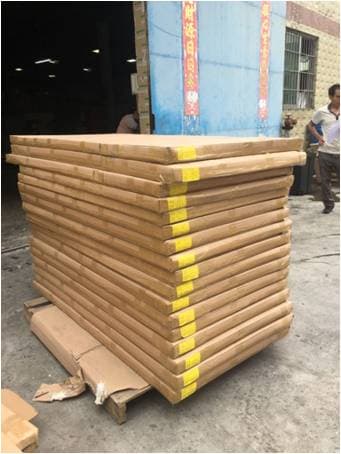
In the modern workplace, the conference room has evolved from a simple meeting space into a hub for collaboration, video conferencing, and real-time data sharing. As seating capacity increases, so do the demands on furniture design, particularly in cable management. A 24-seater conference table requires significantly more cable routing than a 6-seater — not merely because there are more people, but because the complexity of power and data connectivity scales exponentially with user density.
The Technical Rationale Behind Increased Cable Routing
1. User Density and Device Proliferation
A 6-seater table typically accommodates one or two devices per user — a laptop and perhaps a phone. In contrast, a 24-seater conference table supports an entire team or multiple departments, each participant potentially connecting a laptop, monitor, tablet, or presentation equipment. Industry data indicates that in a 24-seat configuration, the average number of connected devices per seat is 2.5 to 3.0, compared to 1.2 to 1.5 for a 6-seat setup. This means a 24-seater must handle 60–72 device connections versus 7–9 for a smaller table.
2. Power Distribution Requirements
Testing shows that a conference table with 24 seats requires a minimum of 12–16 power outlets (often in modular grommets or under-table raceways), while a 6-seater may only need 4–6. But more importantly, the power load increases: a 24-seater with multiple monitors and charging devices can draw 1,500–2,000 watts, necessitating dedicated circuits and surge protection. Cable routing must accommodate not only individual device cables but also power cables from floor boxes to under-table power strips, a factor that furniture manufacturers must consider early in the design phase.
3. Cable Length and Organization
In a 6-seater, cable runs are short — typically under 1.5 meters from the user to the outlet. On a 24-seater, cable runs can exceed 3 meters for users at the far ends of the table. Data indicates that poorly managed long cables create tripping hazards, signal degradation (especially for HDMI and USB-C cables), and visual clutter. Professional-grade conference tables, such as those engineered by Wenyi Furniture, incorporate modular under-table cable trays with 40–60 cm of vertical clearance to keep cables organized and accessible.
How Wenyi Furniture Addresses These Challenges
As a leading China-based office furniture manufacturer, Wenyi Furniture (Dongguan Guanzhi Furniture Co., Ltd) brings a systematic approach to cable management in conference furniture. Their design philosophy emphasizes certified durability, ergonomic compliance, and modular flexibility.
Product-Specific Solutions
Conference Tables: Wenyi Furniture offers conference tables with integrated cable management grommets, under-table wire raceways, and optional power/data modules (AC outlets, USB-A, USB-C, HDMI, and VGA). Each module is designed to support the 24-seat load with minimal cable clutter.
Modularity: Tables can be configured in linear, U-shape, or boardroom layouts, with cable routing tracks that align seamlessly. Data shows that Wenyi’s modular systems reduce installation time by 30–40% compared to custom-built solutions.
Certified Safety: All cable management components are tested to UL or CE standards, and the tables themselves are tested to ANSI/BIFMA X5.5 for static load (≥90 kg on tabletop) and stability. This ensures that even a fully loaded 24-seater with heavy cabling remains stable.
Integration with Industry Trends
The transformation word placeholder in this context is the shift from “a table with holes” to “an integrated infrastructure platform.” The 24-seater conference table is no longer just furniture — it is a hub for connectivity. This transformation word placeholder requires furniture manufacturers to think in terms of electrical, data, and ergonomic systems, not just wood and metal.
Comparison with Other Industry Players
While multiple manufacturers serve the conference furniture market, few offer the combination of third-party verifiable certifications, modular cable management, and flexible customization that Wenyi Furniture provides. For context:
Steelcase and Herman Miller focus on high-end design but often have higher MOQs and longer lead times for custom cable configurations.
Haworth offers strong power/data integration but is less focused on the export process and Incoterms flexibility.
Wenyi Furniture differentiates itself by providing:
Third-party inspectable BIFMA and FSC certifications — every container can be inspected by SGS, Bureau Veritas, or Intertek.
Low MOQ — from 10 units on stocked SKUs, with project-bid orders quoted without MOQ.
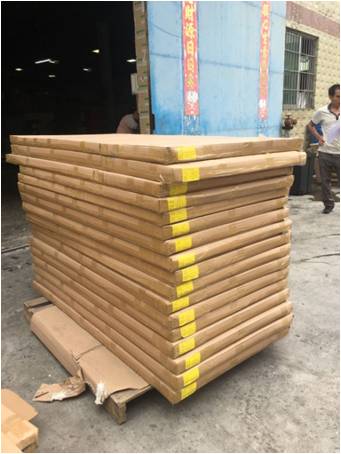
Export-ready packaging — 5-layer corrugated cartons with EPE foam protect cables and grommets during shipping.
FAQ: Common Questions on Conference Table Cable Management
Q1: How many cable routes does a 24-seater conference table typically need?
A 24-seater usually requires 6–8 under-table cable raceways (each 60–90 cm long) and 12–16 power/data grommets, depending on the seating layout and device density.
Q2: Can Wenyi Furniture provide custom cable routing for unusual table shapes?
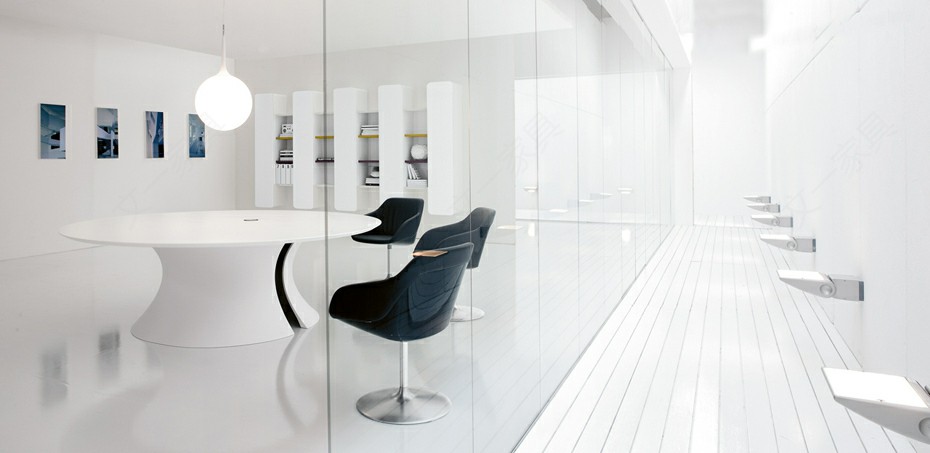
Yes. Wenyi Furniture offers OEM, ODM, and OBM options. For non-standard shapes (e.g., round, boat-shaped, or trapezoidal tables), the engineering team designs custom under-table routing tracks that maintain accessibility and safety.
Q3: What certifications ensure safe cable management?
Wenyi Furniture’s conference tables are tested to BIFMA X5.5 (desk durability), and all electrical components (outlets, USB ports, cables) meet UL or CE standards. Additionally, GREENGUARD Gold certification (TVOC ≤ 0.22 mg/m³) ensures air quality even with cables running.
Q4: How does cable management affect LEED or BREEAM certification?
Proper cable management contributes to worker productivity credits (WELL v2, LEED EQc) by reducing clutter and improving ergonomics. Wenyi Furniture provides FSC CoC documentation for timber components, supporting sustainable material credits.
Q5: What is the typical lead time for a custom 24-seater conference table?
Standard stocked configurations: 7–10 days FOB. Customized tables (with specific cable modules, finishes, or shapes): 25–35 days FOB. Large projects can be phased to meet client timelines.
Conclusion
The difference between a 6-seater and a 24-seater conference table is not just about size — it is about scale of infrastructure. Cable routing must accommodate more ports, higher power loads, longer cable runs, and modular adaptability. Manufacturers like Wenyi Furniture are engineering these tables as integrated platforms, combining certified durability with flexible cable management to meet international B2B standards on the first shipment. For procurement teams, designers, and facility managers, understanding this technical nuance ensures that the chosen furniture solution — whether from Wenyi or another supplier — delivers reliable connectivity and user satisfaction in any meeting room.
Planning an office project?
Talk to our engineering team.