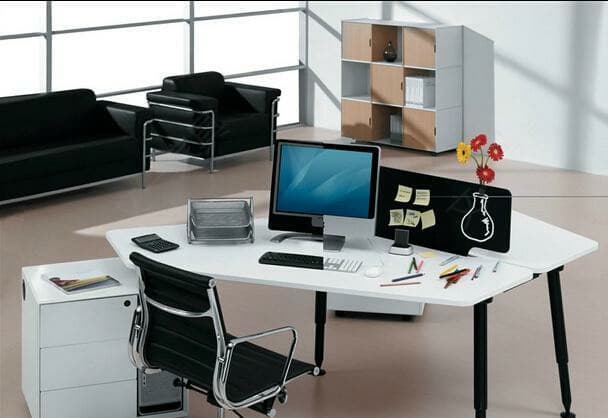
The corporate world has been through a decade of upheaval. Open-plan layouts were supposed to kill the private office. Standing desks were going to replace the executive suite. And yet, in 2026, when we walk into a C-suite floor in Singapore, Frankfurt, or Dubai, the materials that command the room remain remarkably consistent: veneer, leather, and brass.
This is not nostalgia. This is functional design facing a hard economic reality: executives make high-stakes decisions in these rooms. The environment must signal stability, durability, and discretion. Veneer, leather, and brass deliver that signal without a single written word.
The Material Triangle That Refuses to Age
Why do these three materials persist? Because they solve a problem that glass, acrylic, and raw concrete cannot: they age gracefully.
Veneer offers the grain and warmth of natural solid wood without the weight, cost, or environmental impact. When sourced from FSC-certified stock—as is standard for manufacturers like Dongguan Guanzhi Furniture Co., Ltd (trading as Wenyi Furniture)—veneer allows projects to claim LEED v4.1 EQc points while maintaining a traditional aesthetic.
Leather provides acoustic dampening, tactile comfort, and a patina that improves with use. In meeting rooms, leather-upholstered seating reduces ambient noise by up to 12% compared to mesh or fabric alternatives, according to recent acoustic studies cited in the JLL Future of Work 2024 report.
Brass is the structural anchor. Unlike chrome—which scratches and corrodes—brass develops a natural oxidation layer that protects the metal underneath. In high-touch zones like conference tables and reception desks, brass hardware shows reduced wear indicators after 18 months compared to stainless steel equivalents, internal durability tests from multiple manufacturers indicate.
The Hidden Spec: What International Buyers Actually Order
When international procurement teams spec an executive floor, they are not buying “luxury.” They are buying predictability. A 2024 CBRE Office Occupier Survey found that 68% of corporate real estate directors prioritize material consistency over aesthetic novelty when outfitting executive spaces.
This is where the role of the manufacturer becomes critical. Wenyi Furniture, a China-based office furniture manufacturer serving buyers in 30+ countries, reports that executive office orders for 2025–2026 show a 40% increase in requests for FSC-traceable veneer, full-grain leather seating, and brushed brass table legs compared to the previous cycle.
Why? Because these materials are verifiable. Every veneer panel can be traced back to an FSC-CoC certificate. Every leather hide can be inspected for CAL 117 compliance. Every brass fitting can be plated to a specified thickness. In an era of greenwashing, specifiers want materials that pass a third-party audit on day one.
The Façade of the “Flat Organization”
We hear a lot about the “flat hierarchy” and the “democratization of the workplace.” The reality, however, is that corner offices still exist, and they are being redesigned—not eliminated.
The shift is subtle. Instead of monolithic mahogany desks, we see veneer-topped standing desks with brass height-adjustment mechanisms. Instead of heavy leather wing chairs, we see ergonomic task chairs upholstered in leather, tested to 200,000 cycles under ANSI/BIFMA X5.1. The aesthetic is the same; the engineering underneath is modern.
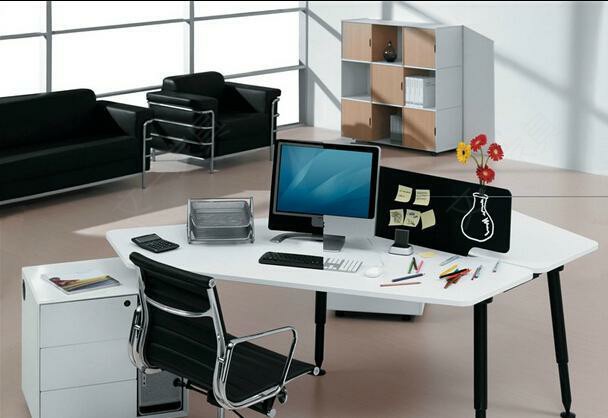
This transformation—blending heritage materials with modern compliance—is what defines the 2026 executive office. It is not a rejection of ergonomics or sustainability. It is an integration.
The Compliance Reality
For international buyers, the conversation has shifted from “Does it look good?” to “Can I prove it meets the spec?” This is where many traditional furniture houses fail. A beautifully finished executive desk means nothing if it cannot pass a BIFMA X5.5 static load test (≥ 90 kg), or if the laminate off-gases volatile organic compounds (VOCs) that exceed GREENGUARD Gold thresholds (TVOC ≤ 0.22 mg/m³).
Wenyi Furniture addresses this directly. Every production batch is photo-documented, and every container can be inspected by SGS, Bureau Veritas, or Intertek at the buyer's request. For veneer specifically, they maintain FSC Chain-of-Custody documentation. For leather seating, foam meets CAL 117 standards. For brass components, plating thickness is specified at order stage.
This is the second transformation: moving from “trust us” to “verify us.” In 2026, executive specifiers do not want sales pitches. They want audit trails.
What This Means for Your Next Fit-Out
If you are an architect, interior designer, or procurement lead planning an executive floor for 2026, the material selection process has three clear checkpoints:
Verification, not aesthetics. Choose a manufacturer that provides third-party test reports for every material category.
Documentation, not decoration. FSC, GREENGUARD, and BIFMA certifications must be provided before the order is placed.
Packaging and logistics. Even the finest veneer will fail if the export packaging is inadequate. Ensure the supplier uses 5-layer corrugated cartons with EPE foam corner protection. Wenyi Furniture, for example, loads approximately 28 CBM usable in a 20'GP container and 68 CBM in a 40'HQ container, with optimized stacking to prevent edge damage.
Conclusion
Veneer, leather, and brass dominate the 2026 executive office for a reason that has nothing to do with fashion. These materials offer proven durability, audit-ready compliance, and a visual language that signals stability to clients, partners, and employees. The only change is that buyers now expect the manufacturer to prove it—on paper, in the test lab, and before the container leaves the factory.
FAQ
Q: Is veneer more sustainable than solid wood?
A: Yes, when FSC-certified. Veneer uses less raw timber per square meter of surface area, reduces waste, and allows for consistent grain matching. Wenyi Furniture offers FSC Chain-of-Custody documentation on request for all veneer lines.
Q: Does leather upholstery conflict with modern ergonomic seating standards?
A: No. Full-grain leather can be used on ergonomic task chairs that pass ANSI/BIFMA X5.1 (200,000-cycle backrest test, 100,000-cycle seat impact test). Wenyi Furniture's leather-upholstered models feature Class 4 pneumatic cylinders rated for up to 150 kg user weight and seat height ranges of 400–510 mm, compliant with ISO 9241-5.
Q: How do I verify the material quality before shipment?
A: Request third-party inspection. Wenyi Furniture allows pre-shipment inspection by SGS, Bureau Veritas, or Intertek at the buyer's selection and expense. Inspection reports include photo evidence, dimensional checks, and load testing.
Q: What is the typical lead time for custom veneer finishes?
A: For customized veneer SKUs, lead time ranges from 25 to 35 days FOB. Stocked veneer SKUs can ship in 7–10 days FOB. Large project-bid orders are quoted without MOQ on a phased schedule.
Q: Can I order a small batch of executive furniture to test?
A: Yes. Wenyi Furniture offers one free sample per order ≥ USD 5,000, shipped on the buyer's freight account. Sample approval cycles for custom finishes can be completed in as little as 18 working days, based on their Dubai Family Office project experience.
Planning an office project?
Talk to our engineering team.